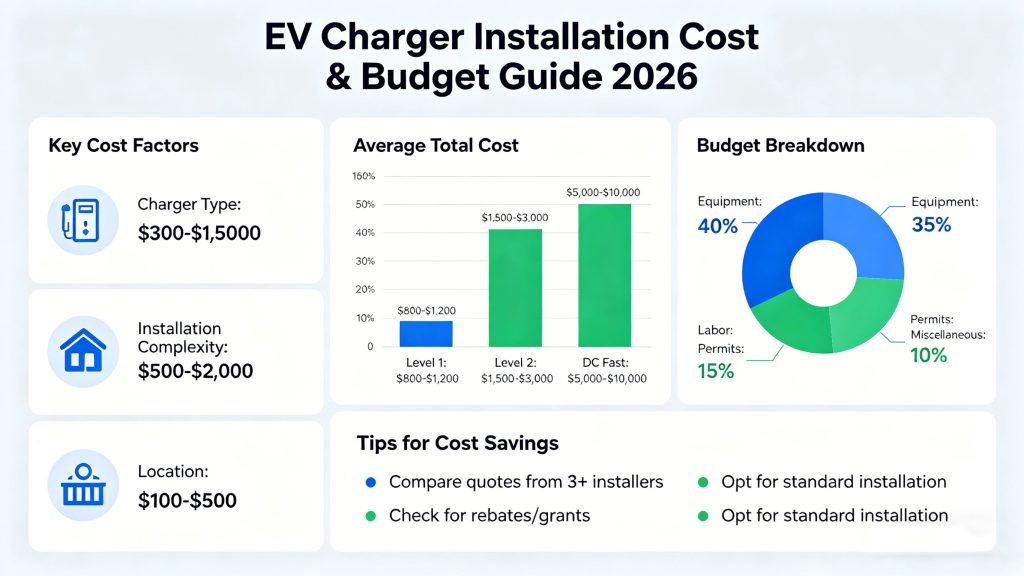

In this guide, we break down 2026 EV charger installation costs, core cost drivers, equipment types, real‑world budget scenarios, rebates and tax credits, and how to choose the right setup for your needs without overpaying.
Why Professional EV Charger Installation Is Essential in 2026
1. EV Charger Equipment Cost
| Type | Typical Power | 2026 Price Range | Best For |
|---|---|---|---|
| Level 2 charger | 7–11kW | $250–$400 | Budget homeowners, basic daily charging |
| Level 2 charger | 11–44kW | $400–$600 | App control, scheduling, energy monitoring |
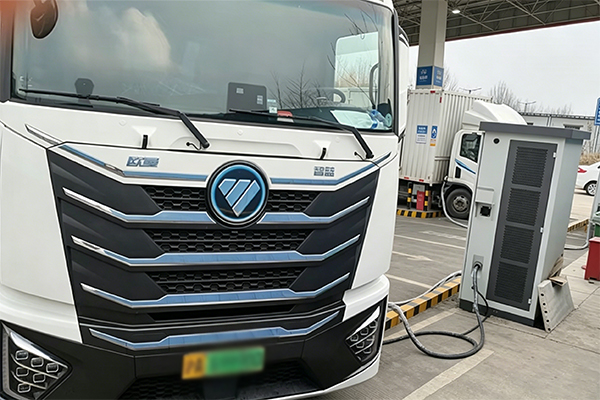
| Level 3 charger | 80kW-360Kw | $3500–$2500 | High‑power EVs, cor commercial, public parking lots |
2. Installation Labor & Materials
Labor makes up 40–60% of total cost, depending on complexity. Licensed electricians average $75–$150 per hour in 2026 metro areas.
| Installation Type | Description | 2026 Cost Range |
|---|---|---|
| Standard Install | Panel near garage, short run (<25ft), existing 240V circuit | $200–$500 |
| Medium Install | 25–50ft wire run, conduit, minor wall penetration | $500–$1,000 |
| Complex Install | Over 50ft, attic/crawl space, detached garage, trenching | $1,000–$2,000 |
| Outdoor Install | Weatherproof box, pole mount, trench conduit | $1,800–$3,500 |
Materials include copper wire, conduit, breakers, junction boxes, and grounding parts. Longer runs significantly increase material expense—copper runs about $2.00–$2.50 per foot in 2026.
3. Electrical Panel Upgrades (If Needed)
Many older homes have 100A panels, which often lack capacity for an EV charger.
- 100A → 200A panel upgrade: $1,500–$3,000
- Load management device (affordable alternative): $200–$500
4. Permits & Inspections
Virtually all areas require a permit for 240V charging installation. Fees run $100–$500 based on location.
Real‑World 2026 Budget Scenarios
Scenario 1: Basic Garage Install (Most Common)
- 7kW budget Level 2 charger
- Panel <25ft away
- No panel upgrade
- Permit includedTotal: ~$800–$1,500
Scenario 2: Standard Smart Charger Install
- 11kW mid‑range smart charger
- 30–50ft wire run
- Minor conduit work
- Permit & inspectionTotal: ~$1,500–$2,500
How to Choose the Right EV Charger Installation in 2026
To avoid budget mistakes and ensure long‑term performance:
- Get a site assessment firstMany reputable installers offer free or low‑cost evaluations to check panel capacity, distance, and obstacles.
- Match charger to your EVMost EVs work with 7–11kW chargers. Performance EVs may benefit from 16–48A high‑power units.
- Prioritize install quality over lowest bidCutting corners on wiring or permits leads to expensive fixes later.
- Claim all incentivesFederal credit + local rebates can drastically lower your net cost.