
Electric vehicle adoption is accelerating across Europe, North America, and the Middle East—but most commercial charging projects don't fail because the hardware breaks. They fail because the specification doesn't match the site.
If you're procuring chargers for a workplace car park, a delivery fleet depot, a retail destination, or a municipal project, this guide gives you a field-tested framework to size, select, and source commercial EV charging equipment without overspending on hardware or underestimating civil works.
Start With Dwell Time — Not With Kilowatts
The single biggest mistake B2B buyers make is leading with power rating. Start with how long vehicles stay parked. Everything else follows.
| Site Type | Typical Dwell Time | Recommended Power | Charger Type |
|---|---|---|---|
| Workplace / Office Park | 6–9 hours | 7–22 kW | AC Level 2, Wall-mounted or Pedestal |
| Hotel / Apartment / Residential | 8–12 hours | 7–22 kW | AC Level 2, Smart with RFID |
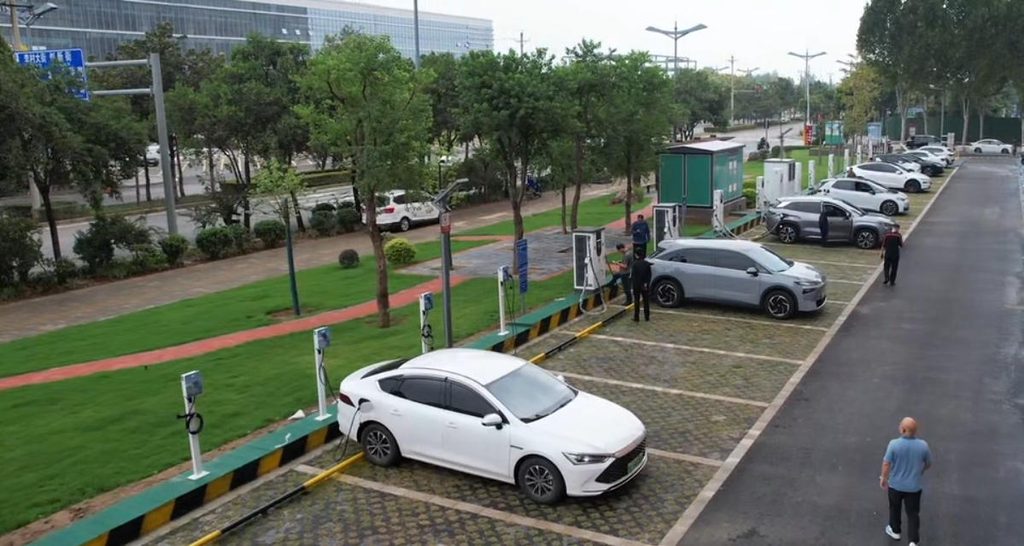
| Retail / Supermarket / Restaurant | 45–90 minutes | 50–150 kW | DC Fast Charger, Single or Dual Gun |
| Fleet Depot (Overnight) | 8–10 hours | 7–22 kW per bay + Load Balancing | AC Smart Charging Network |
| Highway / Service Station | 15–30 minutes | 150–480 kW | DC Ultra-Fast, Liquid-Cooled |
| Car Rental / Ride-Hailing Hub | 2–4 hours | 22–60 kW | AC High-Power or Low DC |
Rule of thumb: Match kW to user behavior first. Then fit the electrical infrastructure to it. Oversizing wastes CAPEX; undersizing kills utilization and triggers support complaints.
AC vs DC — Where Each Technology Pays Back
When AC Level 2 Is the Right Call
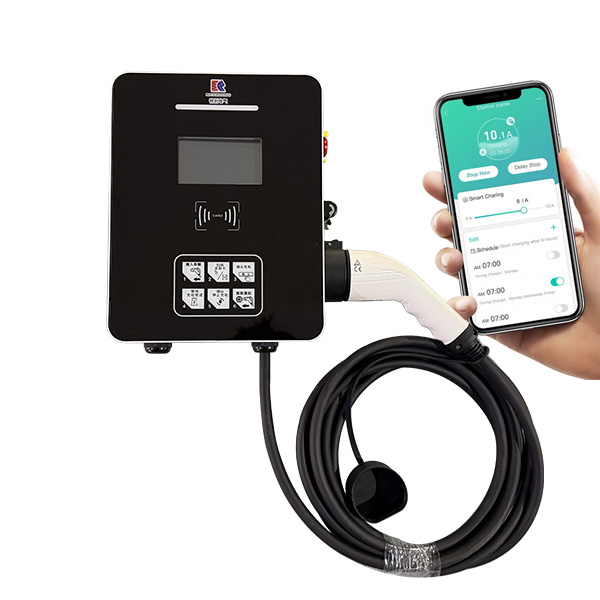
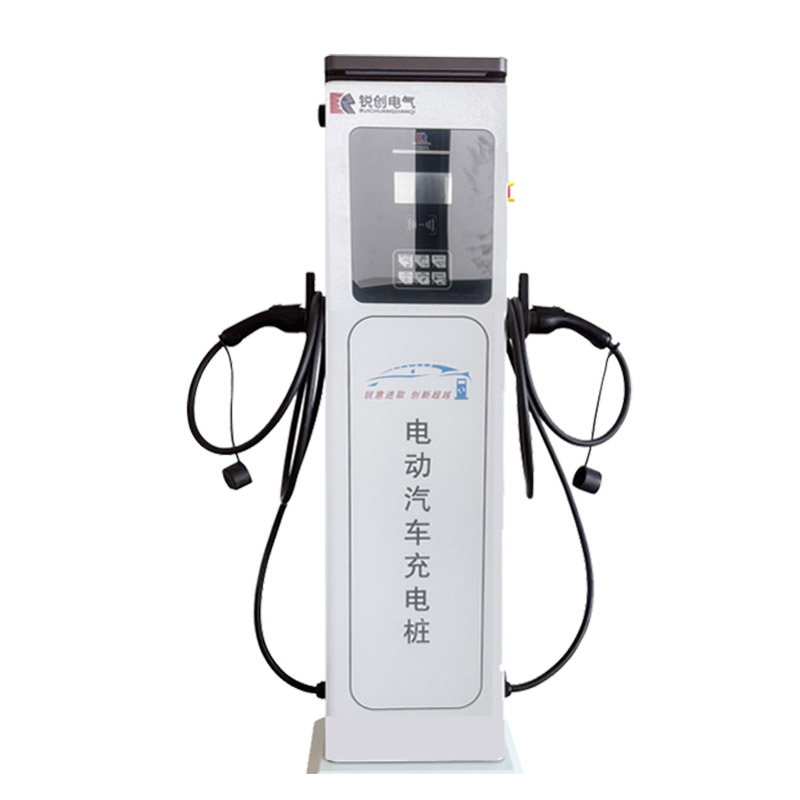
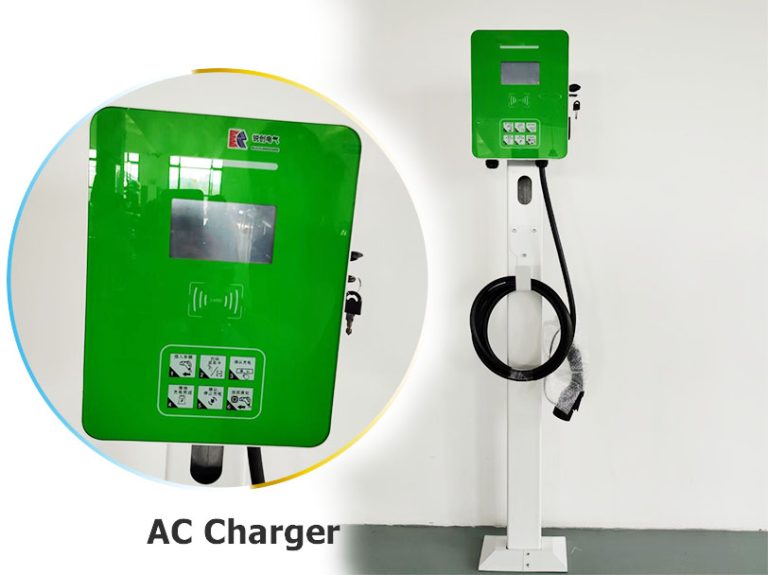
AC chargers (single-phase 7 kW or three-phase 11/22 kW) are the workhorse of commercial deployments. They're ideal when:
- Vehicles park for 2+ hours (workplaces, hotels, apartments, fleet depots)
- You need maximum ports per available electrical capacity
- Budget is constrained and ROI depends on utilization, not speed
- The site has limited grid headroom but you can install many distributed units
Pros: Lower equipment cost (often 60–70% less than DC per port), simpler permitting, no high-voltage DC cabinet required, longer component lifespan, easier maintenance.
Cons: Can't serve high-turnover public bays; not suitable for highway or emergency charging.
When DC Fast Charging Is Justified
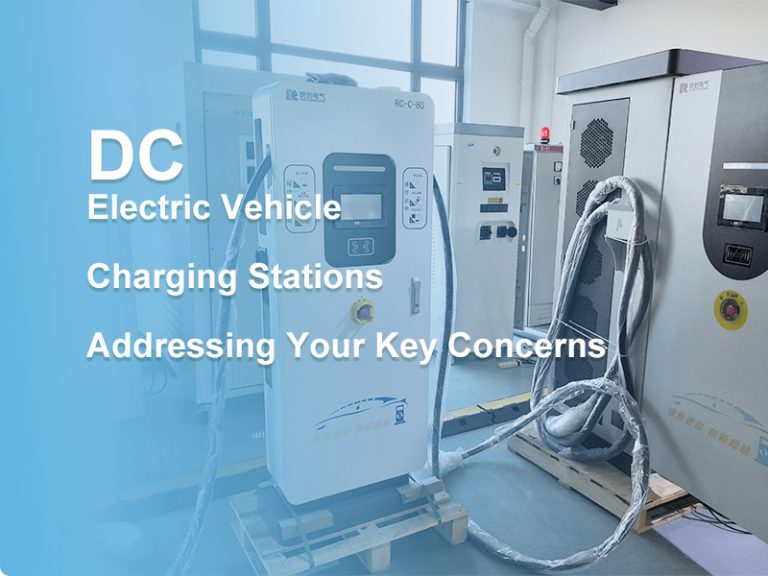
DC chargers bypass the vehicle's onboard AC/DC converter and deliver direct current to the battery. They're necessary when:
- Dwell time is under 60 minutes
- The site is a public revenue-generating asset (pay-per-kWh model)
- You're serving logistics fleets doing intra-day depot swaps
- Grid connection allows 100+ kW dedicated supply
Pros: Highest throughput per bay, premium user experience, enables per-minute or per-kWh monetization.
Cons: 3–5× higher equipment cost, significant civil works (transformer, cooling, cable trenching), backend integration complexity, higher OPEX.
The Hybrid Sweet Spot — 40–60 kW DC
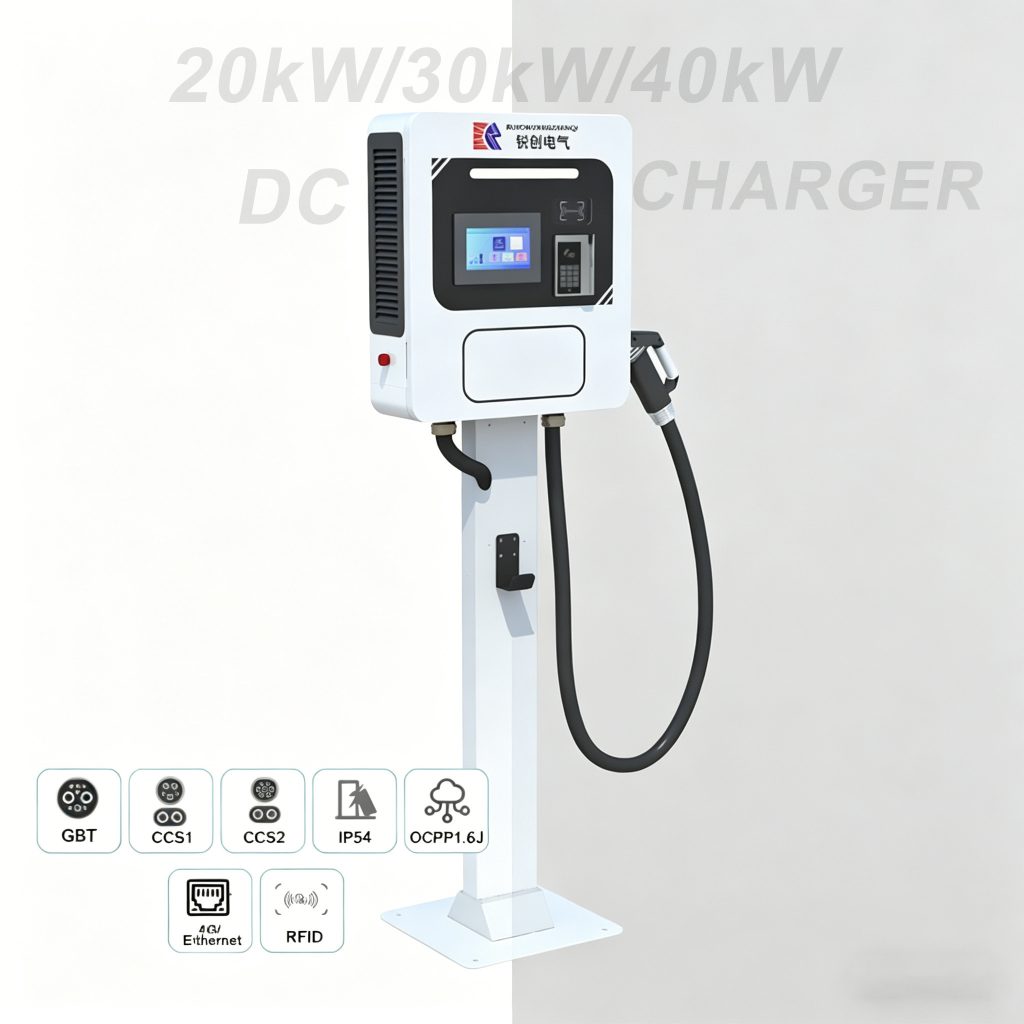
For many retail and destination sites, a 40–60 kW DC unit hits the sweet spot: faster than AC, cheaper than 150 kW+, and manageable on a 63–100 A three-phase supply. This is increasingly popular for supermarket car parks and fuel station conversions.
OCPP and Backend: The Non-Negotiable Standard
If your RFQ doesn't mention OCPP, you're buying a paperweight.
Open Charge Point Protocol (OCPP) is the universal language between your charger and your central management system (CMS). Specifying it correctly prevents vendor lock-in and protects your 7–10 year infrastructure investment.
OCPP 1.6 vs OCPP 2.0.1 — What to Specify
| Feature | OCPP 1.6 JSON | OCPP 2.0.1 |
|---|---|---|
| Status | Industry standard, widely deployed | Next-gen, increasingly required in public tenders |
| Security | TLS 1.2, basic auth | TLS 1.3, certificate-based, enhanced encryption |
| Smart Charging | Basic load management | Advanced ISO 15118-2, V2G-ready |
| Device Management | Remote start/stop, firmware push | Granular diagnostics, modular messaging |
| Market Adoption | ✅ Universal | ⚠️ Growing, specify backward compatibility |
Recommendation for 2026: Specify OCPP 1.6 JSON as minimum, with OCPP 2.0.1 upgrade path confirmed in writing. If your target market is the Netherlands, Germany public tenders, or US utility rebate programs, OCPP 2.0.1 is increasingly a requirement, not a nice-to-have.
Backend Integration Checklist (Copy-Paste to Your RFQ)
- [ ] OCPP 1.6 JSON (minimum) or 2.0.1 supported
- [ ] Remote firmware update with rollback capability
- [ ] Session data API (start/stop, kWh, duration, cost)
- [ ] RFID, app, and POS payment integration documented
- [ ] TLS encryption + signed firmware + role-based access control
- [ ] Tested integration log with at least one major CMS (provide proof)
- [ ] Uptime monitoring and alerting webhook
Load Management & Power Sharing — Multiply Ports Without Upgrading the Grid
Most commercial sites don't have unlimited electrical capacity. Smart load management lets you install more chargers than your panel rating would normally allow.
Dynamic Load Balancing (AC Sites)
A controller monitors the site's total draw in real time and distributes available kW across all active chargers. If the building's HVAC kicks on, charging power automatically steps down. When demand drops at night, charging ramps up.
Real-world example: A 200 A three-phase service can support 10 × 22 kW AC chargers with dynamic load balancing — something impossible with static allocation.
Dual-Gun Power Sharing (DC Sites)
A 120 kW dual-gun DC charger doesn't always deliver 60 kW + 60 kW. In power-sharing mode, it can allocate 90 kW to one vehicle and 30 kW to the other based on battery state of charge and vehicle acceptance rate. This maximizes throughput without upgrading the grid connection.
Phased Deployment Strategy
Civil works are the most expensive part of any charging project. Design for 10 bays, trench for 10, but energize 4 first. Add chargers as utilization crosses 30–40%. This preserves CAPEX while keeping expansion friction low.
Certifications Buyers in Different Markets Must Verify
Never accept a CE mark without asking which directive. Here's the minimum certification matrix by region:
| Market | Mandatory Certifications | Connector Standard | Notes |
|---|---|---|---|
| European Union | CE (EMC+LVD), IEC 61851-1, IEC 62955, RoHS | Type 2 (AC) / CCS2 (DC) | MID billing meter required for public revenue |
| United Kingdom | UKCA, CE transitional | Type 2 / CCS2 | Smart charging mandate (Electric Vehicles (Smart Charge Points) Regulations 2021) |
| United States | UL 2594, CSA C22.2, FCC | J1772 (AC) / CCS1 or NACS (DC) | NEC Article 625 compliance; utility rebate pre-approval |
| Canada | CSA C22.2 No. 280, UL 2594 | J1772 / CCS1 | ESA approval per province |
| Middle East (KSA/UAE) | IEC + SASO (KSA) / ESMA (UAE) | Type 2 / CCS2 | Local attestation and Arabic labeling often required |
| Australia/NZ | RCM, AS/NZS 3000, AS/NZS 60335 | Type 2 / CCS2 | Certificate of Suitability per state |
Pro tip: Ask your supplier for the actual test report, not just a certificate image. Many trading companies print certificates they don't hold. A legitimate manufacturer will share the full IEC/UL test report within 24 hours under NDA.
Total Cost of Ownership — Not Catalogue Price
The FOB price is the smallest line item in a 10-year charging deployment. Here's what your TCO model must include:
| Cost Category | Typical % of 10-Year TCO | Notes |
|---|---|---|
| Equipment (charger hardware) | 15–25% | FOB + shipping + import duty |
| Civil & Electrical Works | 30–45% | Trenching, conduit, transformer, switchgear |
| Backend / CMS Subscription | 10–15% | Per-port monthly fee, 5–10 year term |
| Connectivity (SIM/4G/5G) | 3–5% | Per-device data plan |
| Maintenance & Spare Parts | 10–15% | MTTR, on-site service, cable replacement |
| Energy (if operator-owned) | 20–35% | Wholesale vs retail electricity cost |
A $400 cheaper unit with no OCPP roadmap, no local spare parts, and a 12-month warranty usually costs 40–60% more by year 3 through downtime, emergency service calls, and forced replacement.
5-Point Procurement Checklist (Copy-Paste to Your RFQ)
- Rated power per port + sustained output curve under 40°C ambient
- OCPP version + backend API documentation + tested CMS integration log
- Ingress protection — IP54 (indoor/sheltered) minimum; IP65 (outdoor exposed) recommended; IK10 impact rating for public sites
- Warranty terms — minimum 2 years parts, 3–5 years available; MTTR SLA in writing; spare parts availability confirmed for 7+ years
- Reference site — same vehicle mix, same climate zone, minimum 12 months in operation (ask for contactable reference, not just photos)
Why B2B Buyers Source Directly From an OEM EV Charger Manufacturer
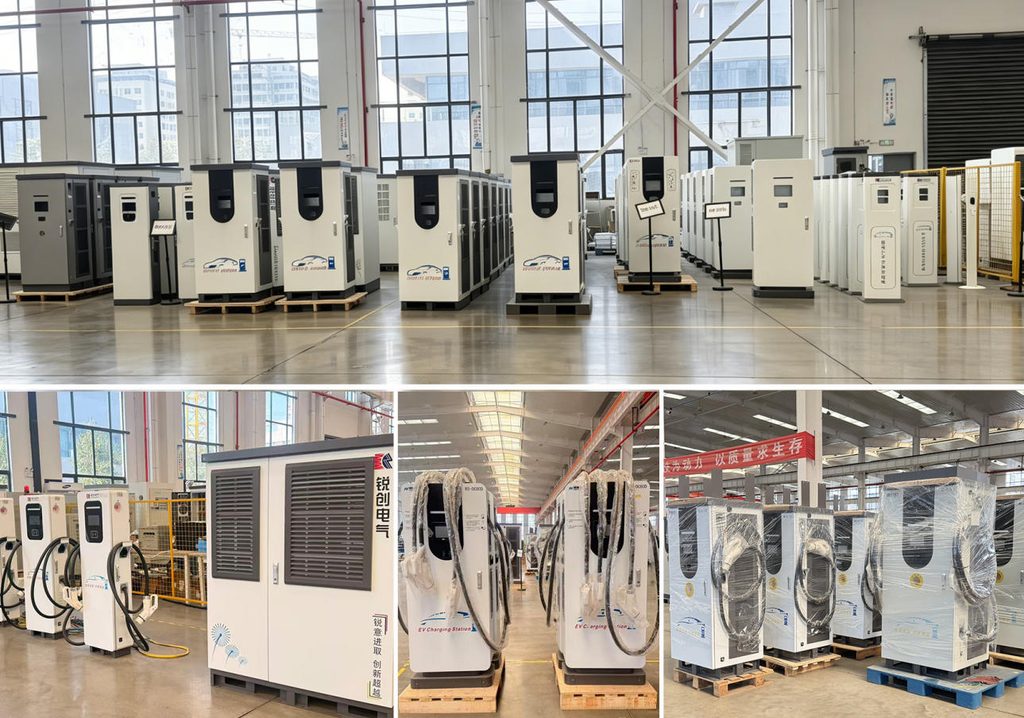
Working directly with a manufacturer — rather than a trading company or distributor — gives you:
- Customization: Enclosure color, logo, language/HMI text, cable length, connector type tailored to your market
- OCPP backend options: Choose your CMS or use ours; API access included
- Bundled spare parts kits: Reduce MTTR from weeks to days
- Certification alignment: Factory pre-tests to your target market's standards before shipment
- Transparent pricing: No double margin; volume pricing tiers locked in contract
- Engineering support: Site layout review, single-line diagram assistance, remote commissioning
If you import to Europe or North America, ask any supplier for:
- A reference bill of lading (not just photos of a port)
- A tested OCPP integration log with a named CMS
- A warranty claim history for the past 12 months (redacted for privacy)
A serious manufacturer will provide all three within a week. A trading company won't.
Frequently Asked Questions
Q: What's the difference between a commercial EV charger and a residential one?
A: Commercial chargers are built for higher duty cycles (continuous operation), support OCPP backend integration, offer RFID/user authentication, include payment processing capability, and carry commercial-grade warranties. Residential units typically lack backend connectivity, have lower IP ratings, and aren't designed for public revenue generation.
Q: How many AC chargers can I install on a 200A three-phase service?
A: With static allocation, roughly 5 × 22 kW (assuming 32A per phase). With dynamic load balancing, you can install 10–12 × 22 kW units because the controller ensures total draw never exceeds 200A. Always commission a qualified electrical engineer for the final design.
Q: Do I need OCPP 2.0.1 or is 1.6 enough?
A: OCPP 1.6 JSON is sufficient for most private and semi-public deployments today. However, public tenders in Germany, the Netherlands, and several US utility rebate programs increasingly require OCPP 2.0.1. Specify 1.6 minimum with a confirmed 2.0.1 upgrade path.
Q: What warranty should I expect from a manufacturer?
A: Minimum 2 years parts warranty; 3–5 years is standard for commercial-grade equipment from established OEMs. The warranty should cover power modules, screens, cables, and enclosures. Ask for MTTR (Mean Time To Repair) in writing — under 72 hours for critical failures is the industry benchmark.
Q: Can I install DC fast chargers without upgrading my transformer?
A: Possibly. A 40–60 kW DC unit can run on a 63–100A three-phase supply, which many commercial sites already have. For 120 kW+, you'll likely need a dedicated transformer. A load study by a local electrical contractor is mandatory before ordering.
Q: What's the lead time for a container order from a China manufacturer?
A: Standard models: 15–25 days. Customized/OEM: 30–45 days. Shipping adds 25–40 days depending on destination port. Plan for 60–90 days total from PO to delivery for non-stock items.
At Risen, we manufacture AC and DC commercial EV chargers with OCPP 1.6/2.0.1, CE certification support, and customization options for importers and distributors across Europe, North America, and MENA.
👉 Download our Commercial Charger Specification Sheet (EU / US / MENA editions) or send your site single-line diagram to our engineering team for a free sizing proposal.