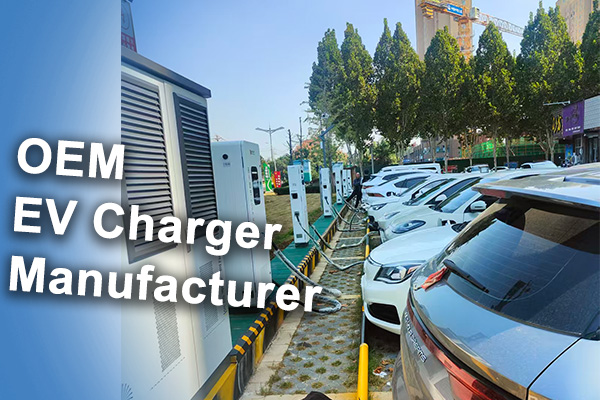

EV charging piles are booming in number everywhere now. But do you know how they work and how to charge your EV car? This article gives a brief and professional introduction to their working principles.
An EV charging pile is more than a simple power supply device. It is an integrated intelligent system consisting of hardware, embedded software and mobile applications. It automatically controls charging safety, speed and billing throughout the process, enabling safe and convenient EV charging.
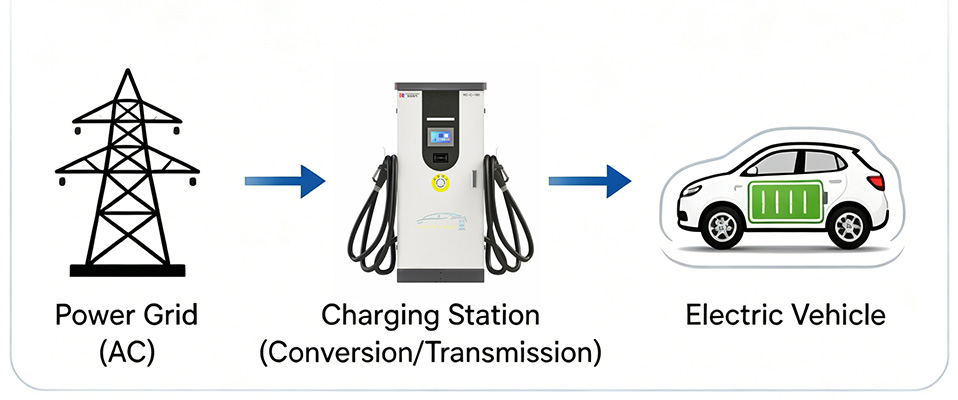
The public power grid supplies alternating current (AC), while EV batteries only store direct current (DC). Therefore, the core of EV charging is to convert grid AC into battery-compatible DC.
1.About the Hardware Part
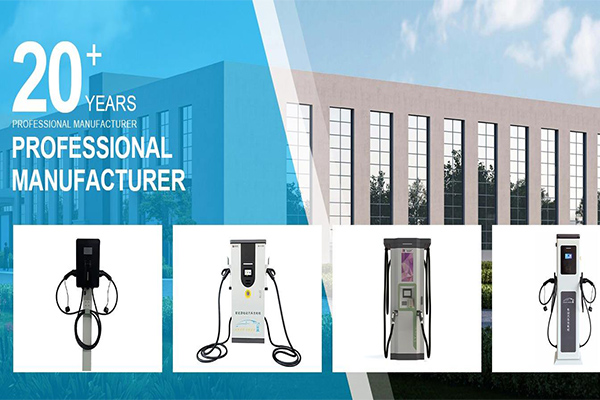
There are two types of charging piles: AC slow chargers and DC fast chargers.
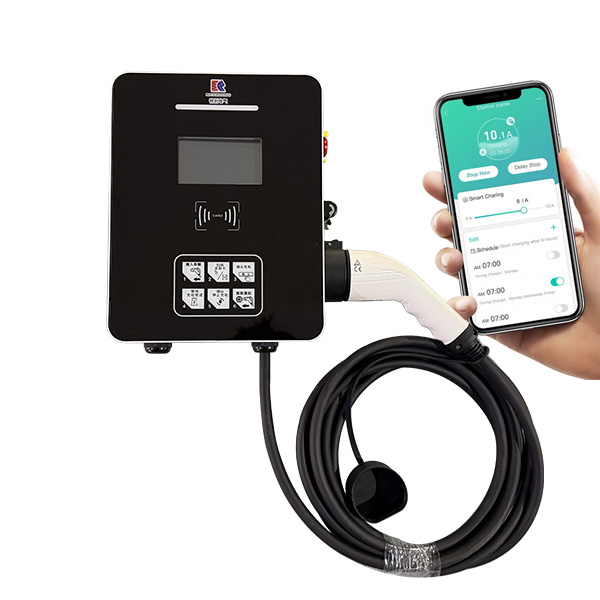
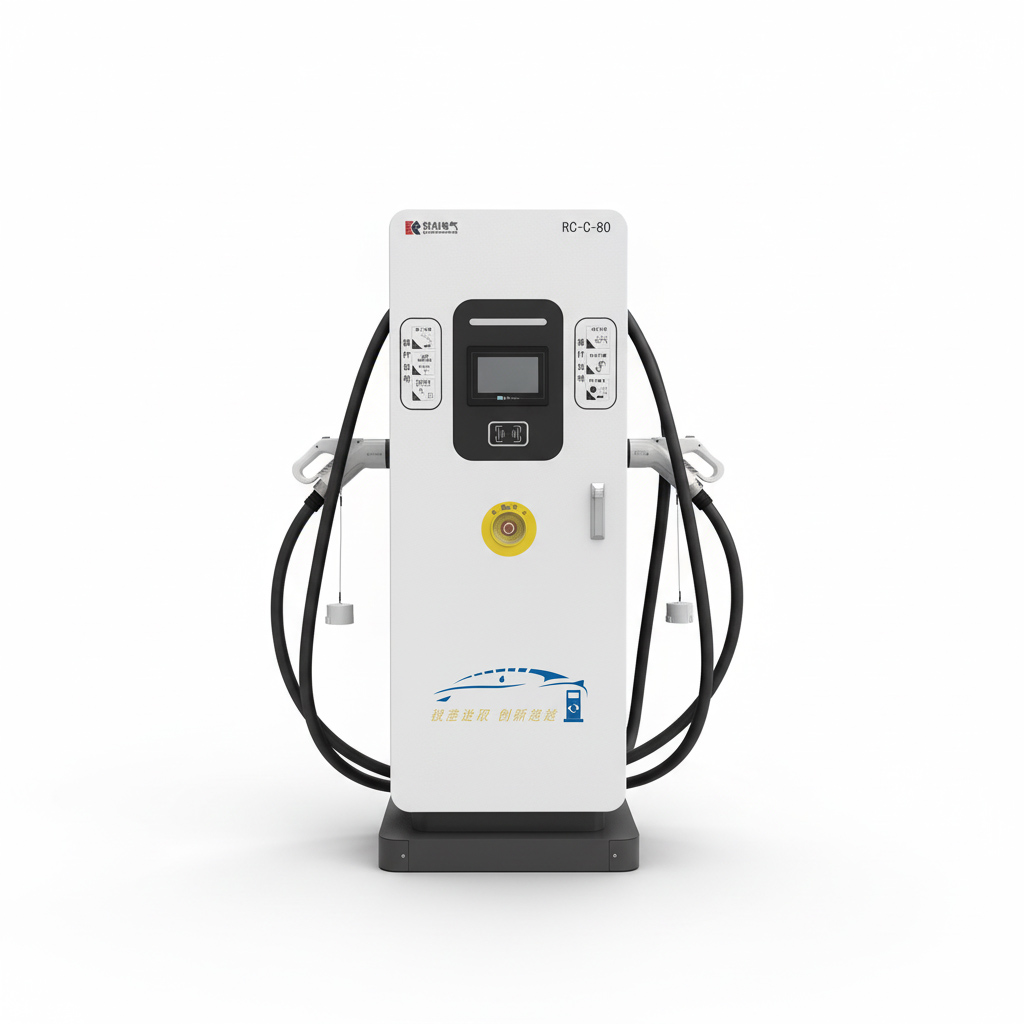
AC charging piles only transmit power and protect circuits without converting current. The AC-DC conversion is completed by the vehicle’s onboard charger. This results in a low charging speed, with a full charge taking 6 to 10 hours, making it suitable for overnight slow charging.
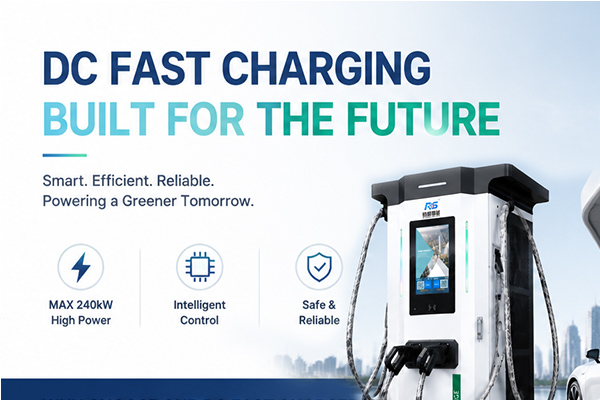
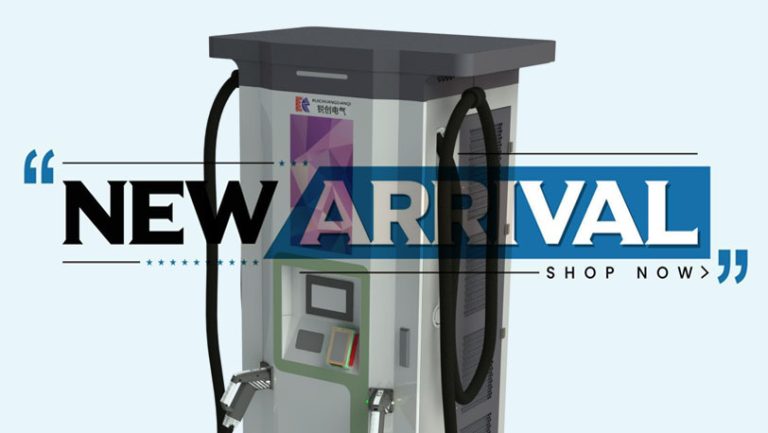
Equipped with built-in transformer and rectifier modules, DC fast charging piles directly convert grid AC into matching DC for EV batteries. They support high-power continuous charging and can replenish most battery power in about half an hour, greatly improving charging efficiency.
2.About the Software
If hardware forms the physical body of a charging pile, software serves as its intelligent brain. The software system mainly includes two layers: local embedded programs and cloud management platforms.
The onboard embedded software undertakes real-time on-site control. It monitors the entire charging process and dynamically adjusts charging speed based on battery level. It adopts high-current fast charging for low battery levels and low-current trickle charging when the battery is nearly full to protect battery health. Meanwhile, it records real-time operating data and triggers automatic alarms and power cuts in case of faults to ensure equipment and vehicle safety.
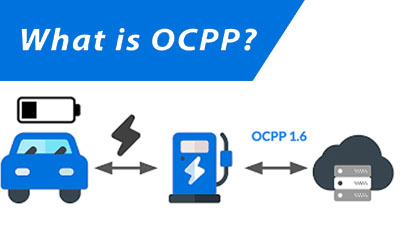
As the central control hub, the cloud management platform connects all charging devices via the network. It remotely monitors equipment status, records charging duration and power consumption, and automatically calculates fees and generates orders. It can also identify equipment faults and dispatch maintenance personnel, realizing intelligent operational management.
3.About the Mobile Applications
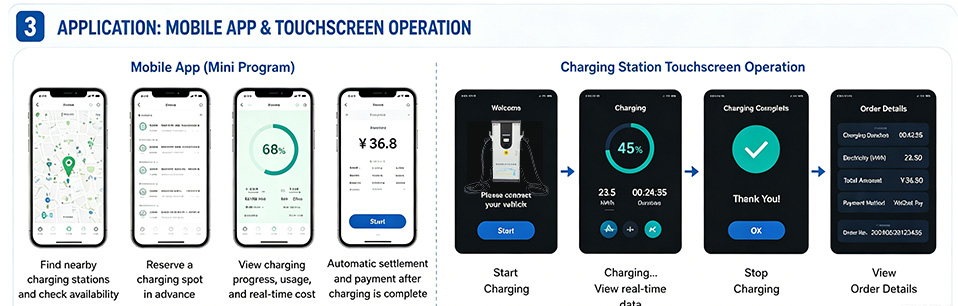
End-users mainly interact with supporting charging applications. these applications allow users to check the location and availability of nearby charging piles and reserve charging stalls in advance. Real-time charging progress, power consumption and costs are displayed during charging, and automatic settlement and deduction are completed after charging, supporting full self-service operation. The touch screen on charging piles also supports start, stop and bill inquiry functions to meet diverse user needs.
The normal operation of EV charging piles relies on the perfect coordination of hardware, software and applications. Hardware provides power supply and safety protection, embedded software realizes on-site real-time control, cloud platforms undertake overall management and billing, and mobile applications build an interactive bridge between users and charging equipment.