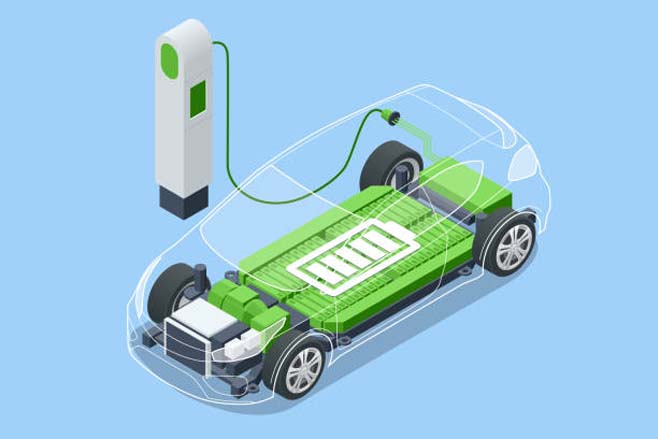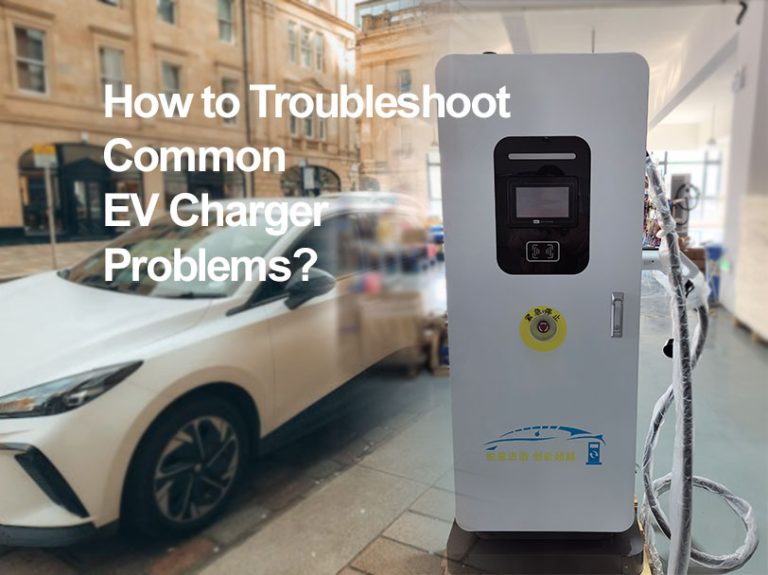

Does charging at an electric vehicle supercharging station actually damage the battery? I've asked several experienced car owners around me about this, and their opinions differ. Some say that frequent fast charging causes rapid battery degradation, while a ride-hailing driver said he supercharges every day and his battery is still fine after 100,000 kilometers. It wasn't until I've driven my own car for over two years that I started to understand, The correct charging method: use fast and slow charging together.
To be honest, I initially relied heavily on supercharging. If I got off work late and didn't want to wait for slow charging, I'd just pull into a supercharging station and charge to 80% in the time it takes to use my phone—it was incredibly convenient. But last winter, I noticed something was wrong; the range on a full charge had noticeably decreased. Before, I could go 400 kilometers, but now even 350 kilometers was difficult. I initially thought it was a battery problem, so I took it to the dealership for inspection. The mechanic said it was just from using fast charging too frequently.
The mechanic told me that supercharging isn't actually a continuous high-current charging process. Have you noticed that? After charging to 80%, the charging speed suddenly slows down, and some charging stations even switch to slow charging mode. This is because high-current charging to the later stages can cause the battery cells to "get tired," and forcing charging can easily lead to lithium plating, like small ice crystals forming inside the battery. Repeated charging will definitely reduce capacity. However, it's not that fast charging is completely unusable. He said some cars have well-designed fast charging strategies, reaching 80% in 30 minutes with minimal impact on battery life; others reach 80% in 15 minutes, which definitely results in greater wear and tear.
I remember chatting with Brother Zhang, a ride-hailing driver. His car is constantly at supercharging stations. I asked him if he wasn't afraid of damaging the battery. He laughed and said he had a trick: he never charges to full capacity, always stopping when it reaches about 70%. And he makes sure to find a slow charging station every week to fully charge it. "It's like eating," he said, "you can't eat fast food every meal; you need a home-cooked meal to nourish your stomach." I thought his words made a lot of sense.
Later, I tried this method myself, and it really worked. My commute to work isn't far, so I use my home slow charger. I plug it in before bed and leave with a full charge the next morning. For long weekend trips, I charge it to about 80% at a supercharging station beforehand—enough for my needs. Once, in a rush, I charged it to 90% and then unplugged it. I found that the battery life dropped faster on the highway than usual. The technician explained that this is the "phantom charge" from overcharging with fast charging—it looks full but doesn't actually provide much. A full charge from slow charging is more reliable and can extend the battery life by more than 10%.
Another interesting thing happened. I met an older woman at a supercharging station who was keeping track of charging times in a small notebook. She said she'd heard that fast charging in low temperatures damages batteries, so she specifically chose to charge during the warmer midday hours. I thought it was a bit of an exaggeration at the time, but after checking, it seems to make sense. Batteries are less active at low temperatures, making them more susceptible to problems from high-current charging. However, we don't need to be so strict. In summer, use whatever is convenient, and in winter, avoid prolonged supercharging in sub-zero temperatures.
By the way, many people overlook the battery warranty policy. I specifically checked the manual, which states that a normal charge-discharge cycle should be at least 1,000. Based on my car's 400km range, 1,000 cycles would be 400,000km, a distance most private cars wouldn't even reach before needing a replacement. So don't be too anxious; occasional emergency fast charging is fine, just don't make it a regular occurrence.
My current method is very simple: for daily commutes, use slow charging two or three times a week to keep the battery "online"; for long trips or when in a hurry, use supercharging, but don't overcharge—80% is enough; and once a month, find some free time to fully charge the battery using slow charging to "calibrate" it. Following this routine, my range has barely decreased in the past six months.
Actually, batteries aren't that delicate, but you can't overuse them. A friend of mine bought a car and only used slow charging, saying he was afraid of damaging the battery. One time, he went on a long trip and couldn't find a slow charging station, so he had to drive 200km looking for one—that's real trouble. Balancing convenience and battery wear is the most practical approach.