
Introduction: The Common Dilemma for Fleet/Bus Station Managers
A fleet/bus station manager asks: “We need to equip our station with EV chargers for 20+ buses and delivery fleets. Should we install DC Fast Chargers or AC Chargers?” Good question — both chargers solve EV charging needs, but their charging speed, efficiency, cost, and applicability for fleet/bus scenarios vary greatly. Ignore these differences, and you’ll face long charging waits, low operational efficiency, or unnecessary high costs after installation. We’ll break this down from charging principle to speed, cost, and practical applications to help you match your charging solution to your fleet/bus station’s actual needs.
For fleet/bus stations — whether public transit hubs, delivery fleet depots, or corporate fleet parking lots — EV charging is a core operational support. The choice between DC Fast Chargers and AC Chargers directly affects fleet turnaround time, driver productivity, energy costs, and long-term operational efficiency. Many managers make the mistake of choosing based solely on initial investment, only to find the chargers can’t keep up with fleet schedules or increase energy waste later. This article will eliminate your doubts and help you make the right decision at the first time.
How Does a DC Fast Charger Work? (For Fleet/Bus Station)
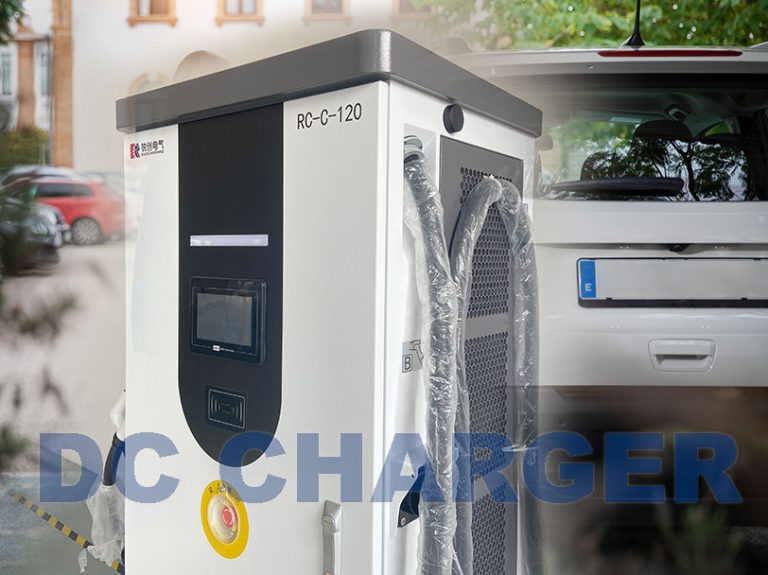
A DC Fast Charger (DCFC) delivers direct current (DC) directly to the EV battery, bypassing the vehicle’s onboard AC-to-DC converter. For fleet and bus applications — which require quick charging to minimize downtime — DC Fast Chargers convert alternating current (AC) from the grid to DC at the charger itself, allowing energy to be transferred to the battery at a much higher rate. Most DC Fast Chargers for fleet/bus stations range from 60kW to 180kW, with some high-power models (200kW+) available for heavy-duty buses and large fleets.
Key characteristics of DC Fast Chargers for fleet/bus stations: The charging process is rapid, capable of delivering 80% battery capacity in 15-30 minutes for most fleet vehicles and 30-60 minutes for heavy-duty buses. This speed is critical for fleet operations, where vehicles need to get back on the road quickly. DC Fast Chargers also support smart charging management, allowing station managers to monitor charging status, schedule charging times, and optimize energy usage to reduce peak-hour costs. Additionally, they can easily integrate with renewable energy resources (such as solar panels), aligning with sustainability goals for fleet operations.
In addition, DC Fast Chargers are designed for high-frequency use — a key requirement for fleet/bus stations, where multiple vehicles may need charging throughout the day. They are equipped with robust cooling systems to handle continuous operation and can support dual-gun configurations, allowing two vehicles to charge simultaneously, further improving operational efficiency.
How Does an AC Charger Work? (For Fleet/Bus Station)
An AC Charger delivers alternating current (AC) from the grid to the EV, which then uses its onboard AC-to-DC converter to convert the power to DC for storage in the battery. For fleet/bus stations, AC Chargers are typically Level 2 models (7kW to 22kW), which are slower than DC Fast Chargers but more cost-effective for long-duration charging scenarios.
Key characteristics of AC Chargers for fleet/bus stations: The charging speed is moderate, usually taking 4-8 hours to fully charge a fleet vehicle and 8-12 hours for a heavy-duty bus. This makes them ideal for scenarios where vehicles are parked for extended periods, such as overnight or during off-peak hours. AC Chargers have lower initial investment and operational costs, as they require less complex infrastructure and no external cooling systems. They are also battery-friendly, as the slower charging rate minimizes wear on the battery, extending its service life.
However, AC Chargers are not suitable for time-sensitive charging needs. For fleets that operate on tight schedules or buses that need to be back in service quickly, AC Chargers can cause bottlenecks, leading to delayed routes and reduced operational efficiency. They also have lower energy efficiency compared to DC Fast Chargers, as the onboard conversion process results in energy loss.
Core Comparison: DC Fast Charger vs AC Charger for Fleet/Bus Station
To help you clearly see the differences, we compare the two chargers from 7 core dimensions that fleet/bus station managers care most about:
Charging Principle
DC Fast Charger: Converts AC to DC at the charger, delivering direct current directly to the EV battery; bypasses the onboard converter, enabling high-speed charging. Suitable for time-sensitive fleet operations where quick turnaround is critical.
AC Charger: Delivers AC to the EV, which relies on the onboard converter to convert AC to DC for battery storage; slower charging due to the extra conversion step. Suitable for long-duration parking scenarios where speed is not a priority.
Charging Speed
DC Fast Charger: Rapid charging — 80% battery capacity in 15-30 minutes (fleet vehicles) and 30-60 minutes (heavy-duty buses); 4-8 times faster than AC Chargers. Eliminates downtime and keeps fleets on schedule.
AC Charger: Slow charging — full charge in 4-8 hours (fleet vehicles) and 8-12 hours (heavy-duty buses); only suitable for overnight or off-peak charging. Not ideal for time-sensitive operations.
Equipment & Operational Cost
DC Fast Charger: Higher initial investment, usually 2-4 times that of AC Chargers; requires more complex infrastructure (e.g., higher grid capacity, cooling systems); operational cost is moderate, with slightly higher energy efficiency but higher maintenance for cooling systems and high-power components.
AC Charger: Lower initial investment, cost-effective for stations with limited budgets; simple infrastructure requirements (compatible with standard grid connections); low operational cost, with minimal maintenance needed (no external cooling systems) but slightly higher energy loss due to onboard conversion.
Grid & Infrastructure Requirements
DC Fast Charger: Requires high grid capacity (3-phase power, 100A+); may need grid upgrades to support high-power charging; requires dedicated cooling systems and larger installation space. Close coordination with utilities is essential to ensure sufficient power supply.
AC Charger: Compatible with standard 3-phase or single-phase grid connections; no grid upgrades needed for most stations; compact design, requiring minimal installation space; no external cooling systems required.
Fleet/Bus Compatibility
DC Fast Charger: Compatible with all modern fleet vehicles (delivery vans, trucks) and heavy-duty buses; supports CCS1, CCS2, and GB/T connectors (adapters available); ideal for large fleets and public transit buses with high energy demands.
AC Charger: Compatible with most fleet vehicles but may not be suitable for heavy-duty buses with large batteries (long charging time); supports Type 2 and J1772 connectors; best for light-duty fleets with flexible schedules.
Energy Efficiency
DC Fast Charger: High energy efficiency (95-98%), as it bypasses the onboard converter, minimizing energy loss during charging. Aligns with sustainability goals for fleet operations and reduces energy costs over time.
AC Charger: Moderate energy efficiency (88-92%), due to energy loss during the onboard AC-to-DC conversion process. Results in slightly higher energy costs for long-term use.
Maintenance Difficulty
DC Fast Charger: Moderate maintenance difficulty; requires regular inspection of cooling systems, high-power components, and connectors; service life of key components is 5-7 years with proper maintenance.
AC Charger: Low maintenance difficulty; regular cleaning of connectors and basic inspection is sufficient; service life of key components is 7-10 years, with minimal wear and tear.
Scenario-Based Selection: Which One Should You Choose?
There is no absolute “better” charger, only the one that is more suitable for your fleet/bus station’s actual operations. Based on different scenarios, we give clear selection conclusions:
Choose DC Fast Charger If:
• You manage a public transit bus station or delivery fleet depot where vehicles have tight schedules and need quick charging (15-60 minutes) to get back on the road. This is especially critical for heavy-duty buses that operate on fixed routes throughout the day.
• You have a large fleet (15+ vehicles) and need to charge multiple vehicles simultaneously (use dual-gun DC Fast Chargers) to avoid bottlenecks and maintain operational efficiency.
• Your station has access to high grid capacity (or can afford grid upgrades) and prioritizes long-term energy efficiency and fleet productivity over initial investment.
• You want to integrate renewable energy resources (such as solar panels) into your charging system, as DC Fast Chargers can easily connect to DC power sources without additional conversion.
Choose AC Charger If:
• You manage a corporate fleet or small bus station where vehicles are parked overnight or during off-peak hours (4+ hours), allowing sufficient time for slow charging.
• You have a limited initial budget and do not need quick charging (e.g., fleet vehicles that are used for local deliveries with flexible schedules).
• Your station has limited grid capacity and cannot support high-power DC Fast Chargers (no need for grid upgrades, reducing installation costs).
• You prioritizebattery longevity (e.g., electric buses with expensive batteries), as the slower charging rate of AC Chargers minimizes battery wear and extends service life.